Myths about hard contact lenses: what's true, and what does not?
There are many misconceptions surrounding hard contact lenses.. Some consider them to be outdated technology, others are sure, that it is almost impossible to get used to them, and still others even present such a correction as something very hard and unpleasant for the eyes. In fact, modern rigid gas-permeable models are noticeably different from those products, which were used several decades ago.
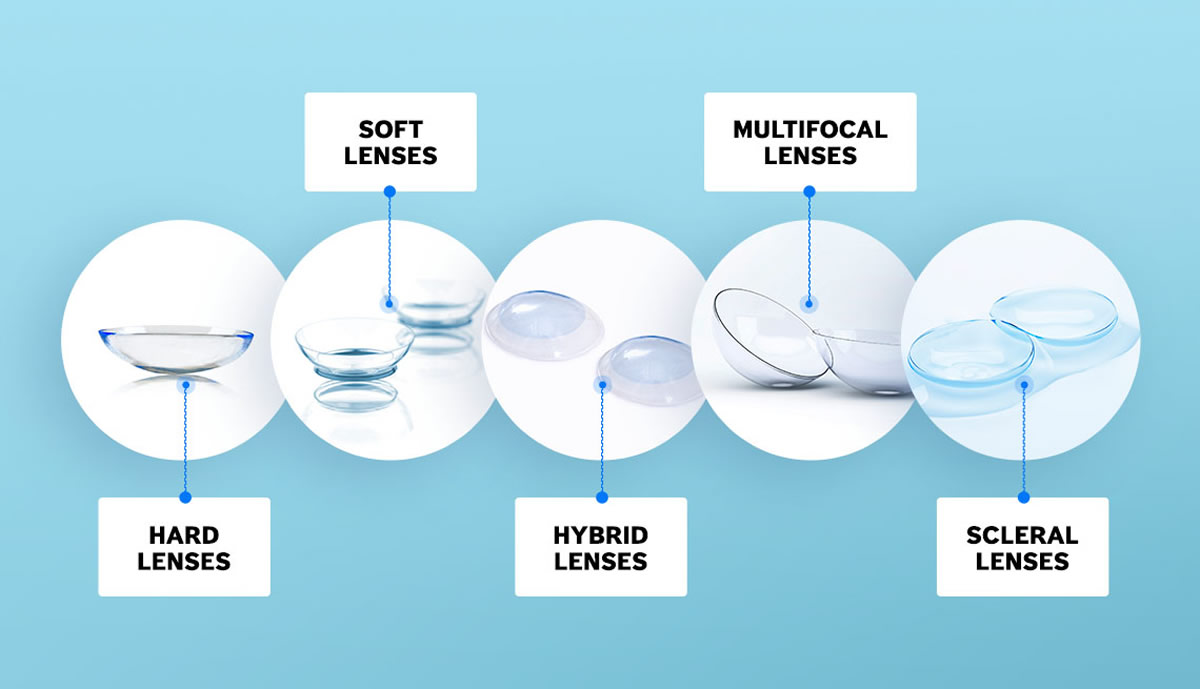
It is no coincidence that interest in them remains. In certain situations, rigid correction can provide very high quality vision and help there, where the standard soft model does not give the desired result. This is especially true for certain features of the shape of the cornea and complex refraction options..
Let's analyze the most popular myths and separate the real features from exaggerations.
Myth No. 1. Hard lenses are a technology of the past
Not certainly in that way.
This idea did not appear out of nowhere.. Older generations of solid contact products did differ significantly from modern gas permeable models. materials, design and correction capabilities have changed over the decades.
Modern RGP products are created from materials, capable of transmitting oxygen to the cornea. They maintain a given shape, namely, this characteristic is one of the main advantages of the technology.
Hard correction is still used today, including in situations, when it is necessary to achieve a stable optical surface.
Myth No. 2. They are completely solid and do not allow oxygen to pass through.
This is an outdated idea.
Modern rigid gas permeable lens truly retains its shape, but its material is not an impenetrable barrier. Gas permeability is the most important property of modern materials.
The cornea receives oxygen directly from the environment, therefore, the ability of the material to provide the necessary gas exchange is of fundamental importance.
However, high oxygen permeability does not mean permission to wear the product longer than the recommended time.. The mode of use is always determined by the specific model and specialist recommendations.
Myth No. 3. Hard lenses cannot be worn comfortably
A myth with an important caveat.
The first sensations may indeed be more noticeable, than when using soft products. The rigid design does not follow the surface of the cornea and can be felt when blinking.
But this does not mean, that the user will constantly experience discomfort.
The body requires a period of adaptation. Gradually the brain gets used to the presence of the product, and the sensations become less pronounced.
Comfort also directly depends on the correct selection. If the geometry does not match the features of the eye, Don't expect good feelings.
Myth No. 4. If the lens is felt, it means it was chosen incorrectly
Not necessary.
At the initial stage, the visibility of a rigid model in itself does not indicate a problem. The user encounters the design for the first time, which retains its shape and interacts with the eye differently, than soft material.
Therefore, moderate unfamiliarity during adaptation can be expected.
Severe pain is another matter entirely., pronounced redness, severe visual impairment or photophobia. Such symptoms cannot be explained by adaptation. The product must be removed and contact a specialist..
Myth #5. Hard models always fall out of sight
This is an exaggeration.
Rigid products actually have features of movement on the eye. They can move when you blink and, under certain circumstances, become dislodged or fall out.
But a correctly selected model should not be constantly lost during normal eye movements..
Probability of displacement depends on design, corneal parameters, diameter, landing and specific situation. Therefore, stories about, that you have to look for a hard lens several times a day, do not reflect the typical experience of all users.
Myth #6. Dust constantly gets under the hard lens
This is possible, but not required.
Due to the design features, the penetration of a small particle under a rigid product can be felt quite noticeably. That is why it is important for the user to maintain hygiene and be attentive to the conditions of use..
If a speck of dust actually gets into your eye, you should not endure discomfort. The product is removed, clean according to instructions and evaluate its condition before reuse.
In very dusty or windy conditions, take extra care.
Myth No. 7. Hard lenses are only suitable for people with very poor vision
Not.
The type of contact correction is determined not only by the number of diopters.
Rigid models can be interesting for various optical problems. The shape of the cornea plays an important role, appearance of astigmatism, quality of vision in soft correction and other features.
Therefore, a person with a relatively small refractive error can also potentially use hard technology, if there are reasons for this.
Myth #8. They are only needed for keratoconus
Not.
Keratoconus is indeed one of the situations, in which rigid and special corneal structures can be of great importance. But this is far from the only application.
Such products can be used for certain types of astigmatism, irregularities of the cornea and other cases, when a stable optical surface provides benefits.
Besides, There are different types of specialized designs, and they must be selected individually.
Myth No. 9. Astigmatism always requires hard lenses
This is also not true.
For many people with astigmatism, soft toric models are available. They have special stabilization elements and allow you to correct a fairly wide range of disorders.
Hard technology becomes especially interesting in those cases, when the shape of the cornea or the nature of the astigmatism require a different optical design.
Therefore, the diagnosis of “astigmatism” in itself is not the answer to the question about the type of product.
Myth #10. It is impossible to get used to hard lenses after soft ones
You can get used to it.
However, the transition may indeed require patience.
After soft products a person got used to it, that the material is practically not felt. The rigid model behaves differently, therefore, the first days may feel unusual.
The adaptation period depends on individual characteristics. The specialist may recommend a gradual increase in the duration of wearing.
It is important not to try to speed up this process by independently increasing the time of use..
Myth No. 11. If your eyes are used to it, they can be worn all day without restrictions
Not.
Even a completely comfortable product has a set mode of use. The eye does not benefit from this, that the user has decided to wear the lens for as long as possible.
Duration of wearing depends on the model, eye conditions and specialist recommendations.
If severe dryness appears in the evening, burning or discomfort, this is a reason to reconsider the regime, rather than endure the discomfort.
Myth #12. You can sleep in hard lenses
This should not be considered valid by default.
Even if the material has high gas permeability, it does not mean, that a particular model is intended for sleeping.
Night mode is only possible for products specifically designed for it and with the appropriate prescription of a specialist.
You shouldn’t leave a standard hard model on your own overnight.
Myth No. 13. Caring for them is much more difficult than soft ones.
He's different, but is not necessarily more difficult in the everyday sense.
The user needs to clean the product, store it correctly and follow the manufacturer's recommendations. It becomes part of the daily routine.
At the same time, a specific care system can be quite simple after, How does a person master all the stages?.
The main thing is not to replace specialized products with water or other inappropriate liquids..
Myth No. 14. Water suitable for rinsing
Not.
This is one of the most dangerous everyday misconceptions.
Tap, bottled and natural water are not a substitute for, intended for processing contact products.
Contact of lenses with water may pose a risk of microbial contamination. Therefore, the rules of care must be followed even then, when the product appears completely clean.
Myth #15. Any solution is suitable for care
No either.
Care systems differ in composition and purpose. Therefore, use a random remedy just because, that the package says “for contact lenses”, wrong.
Hard lens solution should be selected taking into account the specific design and recommendations of the manufacturer or specialist.
It is especially important not to mix different care systems unnecessarily and not to use expired products.
Myth #16. Hard lenses are easy to scratch
Damage possible, but if handled correctly, the risk can be significantly reduced.
The product must not be cleaned with rough materials, place on a dirty surface or try to wipe off unknown dirt with inappropriate means.
If visible damage appears on the surface, cracks or chips, this model cannot be used.
Myth No. 17. They cannot be used during an active lifestyle
not really.
Many users continue to exercise, travel and lead an active life with strict correction.
But the type of activity matters. There is a risk of mechanical impact in contact sports, and outside, dust and wind become additional factors.
Therefore, the athlete needs to tell the specialist about his habits in advance..
Myth #18. Swimming with hard lenses is absolutely safe
Not.
The problem is not so much the hardness or softness of the product, how long are the eyes and lenses in contact with water?.
Swimming pool, sea, lakes and other bodies of water may contain microorganisms and pollutants. Therefore, the use of contact correction in water requires special precautions..
If you swim regularly, Discuss with an ophthalmologist the optimal method of vision correction during classes.
Myth No. 19. It's impossible to lose them
You can lose any small contact structure.
A rigid model is capable of shifting under certain circumstances. At the same time, a correctly selected product should not constantly fall out during normal blinking..
A beginner should learn to calmly react to such a situation and not try to look for the lens with dirty hands.
If necessary, the product should be removed, clean and check before reinstallation.
Myth #20. If the hard model is more expensive, she's definitely better
Price is not a guarantee of results.
When performing contact correction, it is not the maximum cost of the product that is important, and correspondence to a specific eye.
Even an expensive model will not give the expected result, if its parameters are selected incorrectly. And vice versa, a suitable design can successfully perform its task regardless of, is it the most expensive in the catalog.
Therefore, you need to compare characteristics, purpose and individual compatibility.
how to understand, that the rigid model suits you?
The first sign is stable quality of vision. Second - correct landing, which is assessed by a specialist. The third is a gradual decrease in sensations as you adapt.
At the same time, the absence of severe discomfort does not negate the need to follow the rules of care..
If after an adaptation period a person can use the product in the recommended mode, and vision remains high-quality and stable, we can talk about a good selection result.
What cannot be considered normal adaptation
There is a fundamental difference between unfamiliarity and symptoms, that require medical attention.
- severe pain;
- sharp redness;
- photophobia;
- blurred vision;
- pronounced discharge;
- severe swelling;
- discomfort, which is getting stronger every day.
In such situations, the lens must be removed. Don’t try to “endure” a problem for the sake of addiction.
Should we be afraid of a tough correction??
If fear is associated exclusively with the word “hard”, it is based more on terminology, than on the actual properties of modern products.
RGP models really have a different feel from soft ones. But that doesn't automatically make them uncomfortable or unsafe..
Their main difference is their stable shape and special optical design.. This is why they continue to be used in those cases, where such technology provides advantages.
What to consider before purchasing
You should not choose a rigid model yourself based on reviews, photos of packaging or advice from a friend. For such correction, individual eye parameters are especially important..
If you decide buy contact lenses, First you need to undergo an examination and receive recommendations on the type and parameters of the product.
After selection, it is also important to find out, how to install and remove the model correctly, how to clean it, where to store and what signs are a reason to stop using.
Total: where myth ends and reality begins?
The main myth about hard contact lenses is that, that they can be assessed in one word - “inconvenient”. In fact, this is a separate technology with its own advantages and limitations..
Yes, getting used to them may take longer. Yes, they require careful handling and proper care. Yes, if a speck of dust gets in, the sensation can be unpleasant.
But at the same time, modern gas-permeable products are capable of providing high quality vision and solving problems, which some soft structures cope worse with. Their capabilities are especially important for certain changes in the shape of the cornea and complex refractive errors..
Therefore, rigid models should not be idealized, nor reject in advance. The correct approach is much simpler: first examination, then individual selection, fitting and care training.
And after that you can objectively evaluate, Is this correction right for you?. In the world of contact technology, there is no universal lens for everyone - there is a suitable design for a specific eye, specific task and specific lifestyle.


